Today is tax day. Last week, I made the now-familiar drive to see my guy — no longer three blocks away, but out in Annandale, Virginia, thirteen miles from midtown DC.
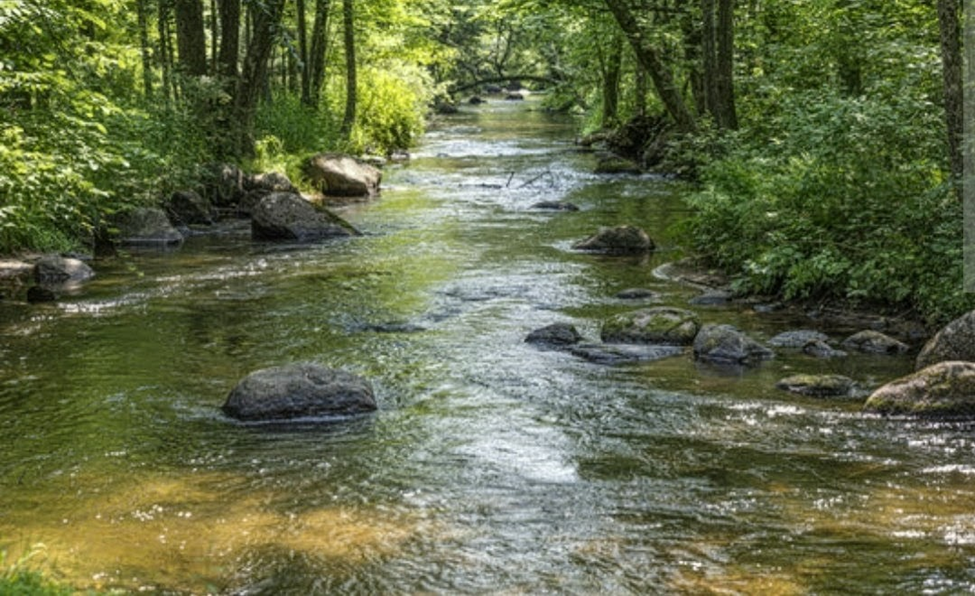
I took Little River Turnpike. For the first time on my annual pilgrimage along that road, I wondered if it was really named after a river. We have the Potomac and the Anacostia. Where the hell was the Little River?
Back at home, in good spirits after having avoided bad news, I went down the rabbit hole. You know the one. I needed to know about the Little River, how it gave the turnpike its name, so I began to search online. You know how that goes. One fascinating bit of information leads to another, that one to another still, and down you go.
I learned that the Little River is a modest stream, a tributary of Goose Creek, part of the Potomac’s watershed. I learned about the village and the terrain through which the stream runs. I learned some of the turnpike’s history — that it was built to connect Alexandria’s busy port with the farmlands toward the west. There was more, much more, but I climbed out of the hole and went on to think about other things.
My new train of thought was quickly stopped on its tracks. There was an obstacle. Something I had seen in the hole came back to me: the number 1802, the year the turnpike’s construction began.
I thought, “Wait a minute. 1802?”
The obvious question arose. I ventured down the hole once more, certain beforehand of the inevitable answer. The rabbit looked at me as if it thought I was stupid to even ask. I couldn’t blame it. It sighed and said, “Of course Little River Turnpike was built by slaves.”
And deeper I went.
The men were hired out by their enslavers, who collected their wages for themselves. The clearing of thick timber, removing of stumps, quarrying of rock, and crushing of stones was grueling work. In 1804, a 21-year-old named Gabriel escaped from the road crew. A reward of ten dollars was posted for his return. The next year, a 50-year-old named Jacob did the same. He, too, was worth ten dollars to the men who claimed him.
That road carried more than farmers to market. When tobacco growing exhausted the soil of Northern Virginia, thousands of men, women, and children — shackled in long lines — were marched along that turnpike to the Deep South. Others were moved from Alexandria’s slave pens toward Virginia’s western frontier. Learning this made me think of the Trail of Tears along which Native Americans were forced west, bringing with them the enslaved African Americans they held who shared in that hardship.
I climbed back out of the hole again, but my thoughts remained. I kept thinking about Gabriel and Jacob. I wondered where they made it to. I wondered if it was across the Potomac, here to DC, this place that became, for some escapees, a kind of haven.
Tomorrow is DC Emancipation Day, our local, official holiday commemorating the abolition of slavery here. Its end came at a cost — but not to those who had borne it. This is the only place where slave owners were paid to give up those they had always seen as their property.
I wonder what the rabbit would say about that?


A very compelling story that captured my attention by the mere inquisitiveness of the title. And, yes, once I read the first sentence, I, too ventured into the rabbit hole. Loved the journey in and out of the hole and the precious nugget of my people’s history.